

Charming Charlotte
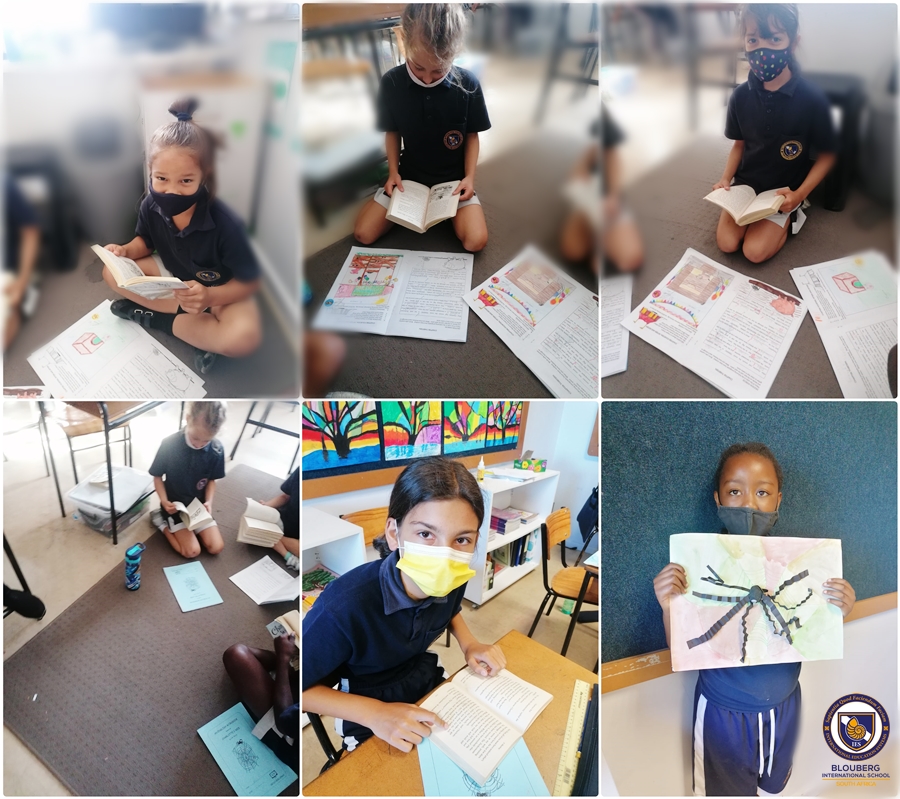
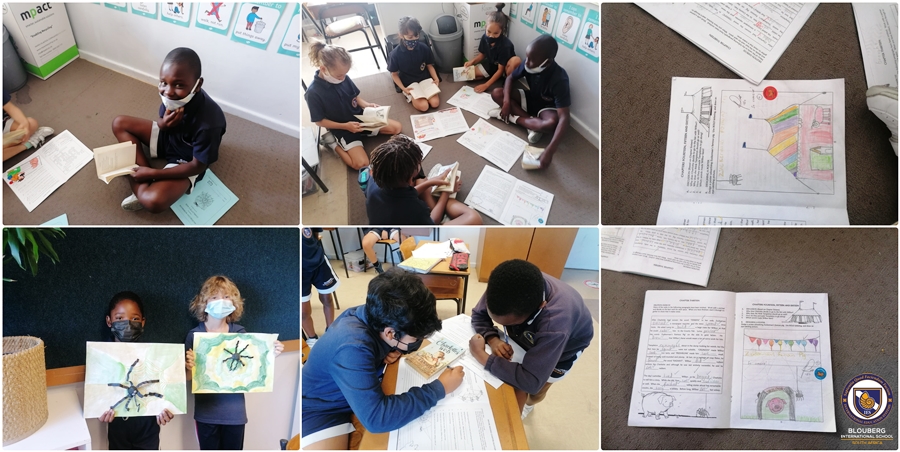
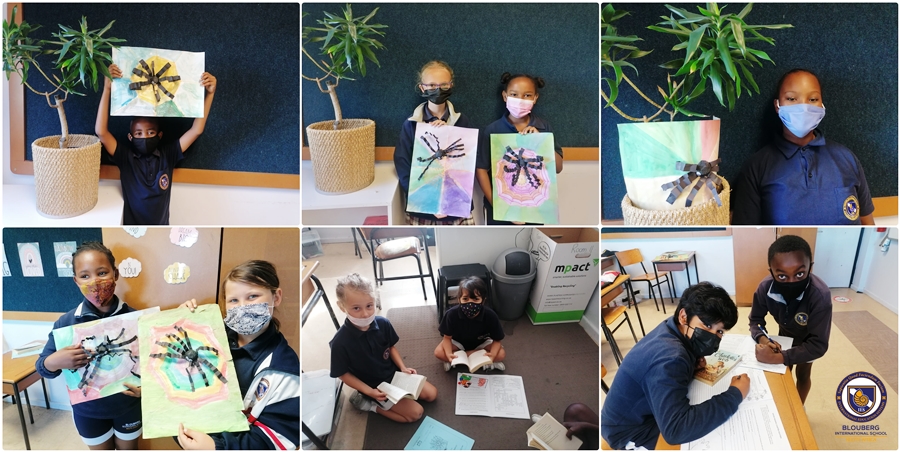
As part of our English Literature Component, the Year 4 students have been reading “Charlotte’s Web” by E.B. White. The book tells the story of girl Fern, who rescues a runt pig and names him Wilbur. Once on the farm, Wilbur makes friends with Charlotte, a beautiful large, grey spider. They become best friends and face a few challenges together. Although a fictional tale, the story also teaches valuable life lessons such as teamwork, friendship and overcoming obstacles.
Over the last few weeks, the students have been reading the novel in class, sharing their opinions and thoughts in groups and completing tasks based on the novel.
In Art, they created beautiful spider webs and spiders, and to end the unit, they will watch the classic movie.
The students have blown us away with their reading aloud skills as well as their thought provoking questions and answers about the novel. We are very proud of our stars!
Yvette Fourie
Year 4 Teacher
Read More

The body Of Science
This term in Science, the Year 6’s learnt about the Human Body. We discussed the different organs such as the heart, liver, lungs, stomach, brain, intestines and kidneys. We also looked at the functions of each of these organs.
In order to understand where each organ is located, the students got into groups and outlined one group member’s body. They then went on to draw the different organs and place them in the correct positions on the body. Each group member had a specific role to play in these creations and the Year 6’s truly impressed their teachers with their creativity and group work.
The students also learnt about the different processes in the body. In order to see that digestion begins in the mouth, the Year 6’s became scientists and did an experiment. They took two test tubes and filled them with water and starch powder. Iodine (which shows the presence of starch by turning a blue colour), was placed in both test tubes and then saliva was placed in one. If the test tube stayed blue then we knew starch was present, if it went clear then we knew there was no starch present. After a while, the test tube with saliva in it turned a clear colour and this proved that the saliva broke down the starch.
Fun facts about the human body:
- You are going to be taller in the morning.
- Your heart beats about 100,000 times a day.
- Your highest blood flow is in your kidneys.
- You can produce enough saliva to fill two bathtubs a year.
- Your blood vessels could circle the globe.
- Your strongest and longest bone is your femur.
- More than half of your bones are located in the hands, wrists, feet, and ankles.
Brittney Hakime
Year 6 Teacher


Read More

Sound & Vibrations
Experi-Buddies came to visit Year 1, to teach us about sound and vibrations, which we are learning about in our Science this term.
The students had a lot of fun experimenting in class, making sounds using balloons, marbles, water in glasses and spoons hanging on string.
Sound is an integral part of a child’s development. In fact, the Parenting Research Centre says, “Sound is critically important to the way children learn about their world.”
The Inting was such a great tool to help our students grasp the concepts even more comprehensively. Perhaps ask your child if they can explain sound and vibrations to you, their first-hand knowledge might just surprise you.
Charlotte Cronje
Year 1 Teacher


Junior Sports Day 2021
Fun Sports Day!
There was great excitement in the junior campus as the students arrived for Sports Day this past Saturday. The students proudly marched onto the field to the song “We are the Champions”.
We then rotated between the different stations of sprints, potato and spoon race, obstacle course and the sack race. Mr Swart even got the teachers to have their own potato and spoon relay, much to the delight of the students. The highlight of the morning was the sibling and parents’ races, with the students eagerly cheering on their families from the sidelines.
The students returned to their classrooms for a well-deserved treat of an ice-lolly before going home. We would like to say a big thank you to all who participated in this memorable event.
Bronwen Nuthall
Reception Year Teacher


Foundation Stage Experi-Buddies Inting
The Foundation Stage was very excited to have Experi–Buddies visit us for an inting to teach us more about Space. Experi–Buddies is an educational extra mural program that uses experiments to show young children that the world of Science can be fun.
The students could not wait to put the lab coats on! They learned that Neil Armstrong was the first astronaut on the moon and that astronauts have to wear weighted moon boots to stop them from floating around because of no gravity in space. They spoke about the Solar System and were delighted to learn the planet song.
They all participated in the experiments and took great pleasure in watching the rocket take off outside, when Mentos were added to Coca-Cola and it “exploded”!
Students should do experiments for the same reason that they listen to stories, take part in sport, etc. Experiments encourage them to be inquisitive, creative and build their self-confidence. Experiments also help to teach children to observe, compare and to predict outcomes while having fun!
Cindy Nunan
Pre-Reception Teacher


Read More

Living And Non-Living
This term, our Year 3’s have been focusing on Living and Non-Living things in Science. The unit provides opportunities for the students to observe a range of living and non-living things and to consider how they know whether or not something is alive. The activities we covered so far, encourages consideration of the seven life processes (movement, respiration, sensitivity, nutrition, excretion, reproduction, and growth) as providing evidence of something being alive.
The students also conducted a survey and collected data about the hair and eye colour of classmates, and then collated their findings into a tally chart.
To end the unit, we looked at stages in the human, animal, and plant life cycle. Students were then given an opportunity to create their own life cycle poster and present their work to the class in the form of an oral. The students put in a lot of effort and hard work and both their posters and orals were amazing. There were many fun and interesting facts presented to the class, and I am certain that we all learnt something new about the various animals.
Well done Year 3! I am so proud of you all
Monalisa Maphosa
Year 3 Teacher

Read More

Year Six English Instructional Writing
Last week in English, we had to create a shoe from only recycled materials, and we had to write instructions explaining, step by step, how to build them. We had one week to complete this activity and in that time period many shoes were invented, and the students had so much fun. Overall, it was a great learning experience.
What we had to do:
Miss Nel gave us a week notice that we were going to build recycled shoes, which gave us plenty of time to gather our materials. First, we started brainstorming on an A3 piece of paper and listed our materials, which became our poster. Next, we picked a theme for our shoe and then started building them. After that, we wrote our step-by-step instructions explaining how to build our shoes. Last, we presented what we built to our classmates.
Results:
Our project was out of fifteen and most of the students received very good marks and should be proud of themselves.
Written by:
Juliette East
Year 6 Student


Read More

The Egyptian Wesekh
Term 4 is always the most exciting for our Year 3’s. This is because they have seen previous Year 3 “Egyptian’s” strutting the school grounds in all their Egyptian finery and they just can’t wait to start learning about Ancient Egypt. We kicked off the term investigating Egypt’s geographical features, the pyramids, Nile River, Egyptian civilization, Pharaohs, as well as their gods and goddesses.
Our Year 3’s have also already begun planning for Egypt Day and have created a beautiful jewellery accessory known as a Wesekh that they can wear on the day. The jewellery of ancient Egyptians held religious and symbolic significance and was treasured for its beauty and power against evil and death. It was buried with men and women because the Egyptians expected to enjoy wearing their finery in the afterlife.
We started our Wesekhs by looking at various real examples and discussing their features and designs, looking in particular at shape, symmetry and colour. Students then went ahead and designed their necklace by first deciding on a shape and then layout. The next step was to decorate the Wesekh by using anything that sparkled including old costume jewellery, glitter, beads and precious stones that the students collected. The results were stunning!
Be sure to keep an eye out for these amazing accessories on the 12th of November when Year 3 steps out in style on Egypt Day!
Mandy Goch
Year 3 Teacher

Read More

Exploring Seed Dispersal
This term, the Year 5’s have been learning about the different ways seeds are dispersed. We looked at seed dispersal by animals, humans, wind and water. Seeds must be dispersed so they have enough space, water and light to grow into a new plant.
Fun Facts about Seeds:
- The largest seed in the world is the double coconut. It can measure up to 50cm (1.6ft) around the middle! Some coconuts have floated 2,000km over the sea before they find dry land!
- Seeds provide the world’s daily food. Your breakfast cereal and toast, your pasta or pizza lunch and your rice dish for tea all started life as seeds from different grasses.
- Some orchid seed-pods hold 3 million seeds.
- Kapok is soft, fluffy stuff that comes from a seed-case. Years ago it was used to fill life jackets, because it is light, strong and waterproof. Nowadays, modern plastics have replaced it.
- Some seeds found in frozen soil in Canada were grown and produced flowers – the seeds were thought to be more than 10,000 years old!
- There are some very dangerous seeds, such as those that come from deadly nightshade; two berries could kill you. Even more dangerous are the seeds from the Castor-oil plant.
- Most oak trees don’t grow acorns until they are at least 50 years old. If you have planted an acorn, how old will you be before you can plant its acorns?
My class (Year 5NM) recently decided to create our very own papery wing shaped seeds to test out how the wind would carry it. We designed different shapes of wings that we attached to a bean seed. We made sure to use paper, making the wings light and feathery, easy to be moved by the wind.
The results of this experiment were great! Students went outside and put their wing shaped seeds to the test. They were exhilarated to get hands on experience with seed dispersal.
Seeds are so interesting and we will certainly never think of them as just seeds ever again.
Nadia Mahomed
Year 5 Teacher

Read More

Biology – Term 1
This term has been a busy one in the Biology laboratory with various topics covered and practicals completed.
IGCSE – The Year 9’s started the term with an introduction to IGCSE Biology. They had an overview of the work covered during the course, as well as the different exam papers they will write at the end of Year 10. Their biological journey began by discussing the features of different groups of organisms which are used by biologists to classify them into groups. We moved on to the cellular organization of living organisms and the processes involved in moving substances across the cell membrane. We did practicals to investigate the movement of water between potato cylinders placed in different solutions and investigated the nutritional content of unknown food stuff by doing various food tests.
In Year 10 we are fast approaching the end of the syllabus with only three chapters left to do. This term we compared the advantages and disadvantages of sexual and asexual reproduction, drew countless Punnett squares to look at the outcome of genetic crosses and discussed the various adaptations that organisms may have to survive in their environment. We are currently discussing energy flow in food webs, nutrient cycles and factors which regulate population size in species.
AS Level – We’ve made a gentle start in Year 11 as the jump from IGCSE to AS level is an intimidating one. We’ve spent many weeks discussing the ultrastructure of plant- and animal cells and the microscopy calculations associated with this chapter. A couple of microscope practicals were done to practice drawing skills and identifying structures in cells. Next, we looked at the building blocks of biological molecules and the chemical bonds that hold them together in complex arrangements. Currently we are investigating enzymes by comparing their affinities for their substrate and the commercial application of immobilizing them in alginate beads. A few “wet practicals” have also been done to practice the skills of diluting stock solutions using different methods, gathering accurate results and the ability to present these in a suitable table. The practical in the photos required students to test for the release of carbon dioxide from a suspension of yeast cells in a sucrose solution by using bromothymol blue indicator solution. This indicator will change to different colours depending on the concentration of carbon dioxide.
The Year 12’s finished the syllabus at the end of 2020, and we are currently revising by working through activities from a workbook and past papers. Practicals are also important to build confidence for Paper 3 at the end of the year.
A Level – We are firing on all cylinders, working through the A Level topics as this is typically a jam-packed and intense academic course. Various topics have been covered in great depth, from the biochemical pathways of photosynthesis and respiration, to how the kidneys regulate the osmotic potential of blood and tissue fluid. Currently we are delving into nervous and chemical coordination of animals, by looking at how action potentials are generated in neurons, the process of muscle contraction and how hormones regulate the female reproductive cycle. This has indeed been a very busy term.
Marlene Feltoe
IGCSE, AS and A Level Biology Teacher
Read More